

OCD treatment in Malaysia: residential care for OCD and addiction
Salus provides residential OCD treatment in Malaysia: a 90-day programme in Cyberjaya, Selangor, for adults aged 18 and over whose obsessions and compulsions have taken over daily life. That includes OCD and addiction together, where alcohol, drugs or a compulsive habit has got tangled up with the rituals. Every guest is assessed by the medical, psychiatric and psychological teams on arrival, and therapy includes exposure and response prevention (ERP).
Signs that OCD has taken over
OCD, short for obsessive compulsive disorder, has two parts: obsessions, which are unwanted thoughts, images or doubts that keep coming back, and compulsions, the washing, checking, counting or repeating a person feels they must do to quiet them. Liking things tidy is not OCD. It becomes OCD when the rituals take hours, cause real distress or crowd out the rest of life.
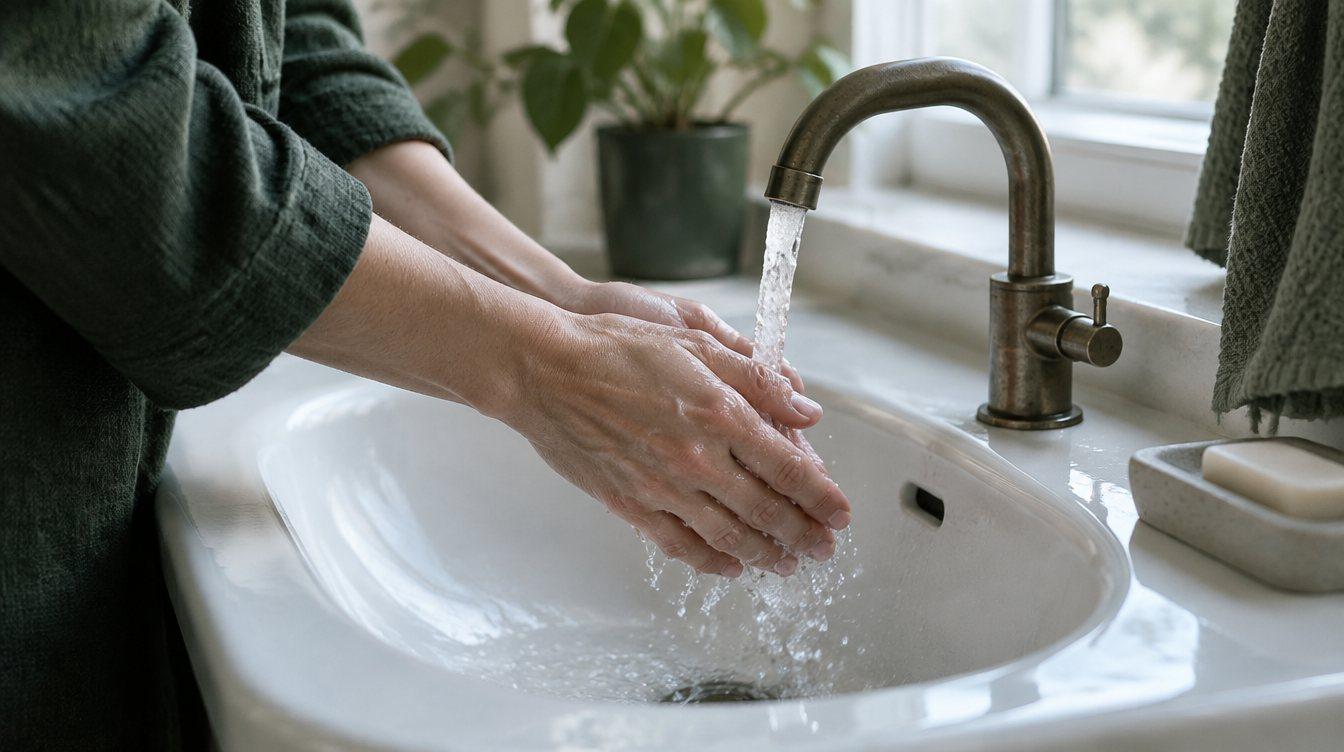
- Washing hands or showering until the skin is sore, or cleaning the same thing again and again, because of a fear of germs or dirt.
- Checking locks, the stove, switches or messages, then having to go back and check once more.
- Frightening, unwanted thoughts or images, such as a fear of harming someone you love, that horrify you and will not leave.
- Doubts about prayer, worship or ritual washing (was-was, in Malay): repeating them, starting again and never feeling sure they count.
- Rituals that take hours, make you late for work, or pull the family in with the same questions and rules every day.
- Using alcohol, drugs or a habit such as gambling to get some relief from the thoughts and the rituals.
How OCD treatment works at Salus
On arrival every guest has a medical review, a psychiatric assessment and a psychological assessment, and the diagnosis decides the therapy. For OCD, therapy is drawn from CBT and other approaches, and includes exposure and response prevention (ERP). A Salus Clinician plans recovery alongside medical care, and the plan is reviewed every week.
01
Assessment on arrival
Three assessments look at the OCD itself, which kinds of obsessions and rituals are present, and whether alcohol, drugs, gambling, low mood or anxiety are part of the picture.
02
Safe withdrawal where needed
If alcohol or drugs are involved, the medical team manages withdrawal safely and comfortably. Some people need hospital care first, and we say so after assessment.
03
ERP, step by step
ERP is the first-line psychological treatment for OCD, and it sits within CBT. With a therapist you list the situations that set off the fear, from easiest to hardest, then face them one at a time while practising not doing the ritual. Each step is agreed beforehand.
04
Other therapy and medication review
CBT and other therapies the diagnosis calls for, such as REBT, SFBT, motivational interviewing or trauma-focused work, treat low mood, anxiety and the urge to drink or use alongside the OCD. The medical team reviews medication where appropriate, with the psychiatrist.
05
Family and a plan for home
Family sessions help your family understand OCD and how to respond to it. You and your Salus Clinician write an aftercare plan, and support continues after you leave.
OCD in numbers
We found no published national figure for how many people in Malaysia have OCD, so these come from the US and from nearby, multiracial Singapore, plus two studies on treatment.
2.3%
of US adults have OCD at some point in their lives, in a national survey carried out from 2001 to 2003
3.0%
of adults in Singapore have had OCD at some point, and only about 1 in 10 of them (10.2%) ever sought treatment
12.8 years
on average from first symptoms to a diagnosis, in a German study of 100 people with OCD
62%
much or very much improved after 12 weeks of intensive ERP in a specialist trial, against 8% given a placebo
Other conditions among people who have had OCD
- Anxiety disorder75.8%
- Mood disorder63.3%
- Impulse-control disorder55.9%
- Substance use disorder38.6%
Share of people with OCD at some point in life who also met the criteria for each condition at some point; US adults, 2001 to 2003, older diagnostic criteria, so not Malaysian data, and the bars overlap because people can have more than one condition.
Ninety days, residential, in Cyberjaya.
A private room, all meals, 24-hour care with medical oversight, individual and group therapy, family sessions and a written plan for going home. One price, with nothing added later.
90 days
Four phases: Restore, Connect, Participate, Integrate
RM7,000 per month
All-inclusive
Why do OCD and addiction so often go together?
In a nationwide US survey, almost 4 in 10 people who had OCD at some point (38.6%) had also had a substance use disorder, which means drinking or drug use that has become a problem. A review of studies from several countries found alcohol use disorder alongside OCD in 14% to 36% of people, depending on the study, and alcohol was the most common substance. The range is wide because the studies counted different groups, so read it as a range rather than one number.
Which comes first? In a US specialist clinic study of 323 adults with OCD, about 70% of those who also had a substance problem said the OCD had started at least a year before it. The US agency SAMHSA says some people with OCD may start using substances to cope with their symptoms, which is called self-medicating. That is a suggestion, not a proven rule, and one study of people with OCD and alcohol problems found mixed reasons, including habit and reward.

Do OCD and addiction need to be treated together?
SAMHSA recommends integrated treatment, which means both conditions are dealt with together, in one plan, by one team. Alcohol also seems to matter for OCD treatment itself. A review of 19 studies of intensive and residential OCD programmes, covering 2,306 people, found that symptoms fell sharply on average, and that alcohol misuse and hoarding predicted worse results. The review adds that little is known about how long the gains last. For that reason the alcohol is treated alongside the OCD.
If alcohol or sedatives such as sleeping pills are involved, stopping suddenly can be dangerous, so a medical assessment comes first. Some people need hospital care before a residential stay, and we say so after assessment. If gambling, gaming or spending is part of it, that goes into the same plan from the first week.
What is was-was, and can it be religious OCD?
Was-was, the doubts and whispering thoughts about prayer, purity and faith, can be OCD. A 2020 paper in the Malaysian Journal for Islamic Studies (Rassool) describes waswas al-qahri, meaning overwhelming whisperings, as OCD as it appears among Muslims, in four areas: belief, worship rituals, purification and fear of losing control. Not every doubt is OCD, and an assessment is how to tell. OCD can attach to whatever a person values, and for many that is faith. A comparison of highly religious Turkish Muslims and Canadian Christians found that religion shapes how OCD looks (Inozu and colleagues, 2012).
Treatment does not ask anyone to give up or weaken their faith. The work is on the doubt and the repeating that has grown around it, and it is done with respect for your beliefs. Salus works within Malaysia's many traditions and never imposes one. You can tell us plainly what is troubling you about prayer, purity or faith.
When does residential OCD treatment make sense?
Most people with OCD are treated as outpatients, with appointments that fit around home and work. The UK's NICE guideline on OCD (CG31, first issued in 2005) sets out steps by severity: brief CBT with ERP for mild impairment, an SSRI (a type of antidepressant) or longer CBT for moderate, and both together for severe. It says to consider inpatient services with specific expertise in OCD when there is risk to life, severe self-neglect, or extreme distress or impairment. Its quick reference guide adds repeated failed attempts at outpatient treatment and complex mixed diagnoses.
Salus is not a hospital. If there is a risk to life, or someone has stopped looking after themselves, that needs urgent medical help first: call 999 or go to the nearest emergency department. For support that is not an emergency, Talian HEAL 15555 takes calls every day from 8am to midnight. Beyond that, a residential stay is worth considering when weekly appointments have not been enough, when rituals fill most of the day, or when alcohol, drugs or a habit such as gambling is part of it. After a full assessment we tell you honestly whether Salus is the right place, or whether you need a hospital-based OCD service first.
Questions families ask.
How long does OCD treatment take, and what does it cost?
The programme is 90 days, and progress through its four phases, Restore, Connect, Participate and Integrate, follows readiness rather than the calendar. ERP works through repeated practice, so time matters, and it also gives room to settle any alcohol or drug use. The cost is RM7,000 per month, all-inclusive, so about RM21,000 for 90 days, covering accommodation, meals, medical oversight, individual and group therapy, family sessions and aftercare.
Does Salus treat OCD on its own, or only when there is addiction?
Both. OCD on its own is welcome, and so is OCD with alcohol, drugs or a behavioural problem such as gambling. The programme is for adults aged 18 and over. Salus is not a care home, not elderly or nursing care, and not a spa. It is a clinical residential programme with a medical, psychiatric and psychological team.
What is exposure and response prevention (ERP), and is it frightening?
ERP means facing a feared situation on purpose, in small steps, and holding back from the ritual that normally follows. Anxiety usually rises first and then eases. The steps are agreed with your therapist beforehand. In a 12-week trial at specialist centres, 62% of people given intensive ERP were much or very much improved, against 8% on a placebo. That was a research setting, so it is not a promise of the same result at Salus.
How do I help someone who will not admit it is OCD?
Many people hide it. In a US survey, only one in five people who had OCD in the past year received treatment aimed at OCD, and Malaysian researchers describe stigma as a major obstacle to seeking help. Pick a calm moment and say what you have seen and how it makes you feel. Say it once, then leave the door open. You can call Salus without them knowing.
Is medication part of OCD treatment?
The medical team reviews medication where appropriate, together with the psychiatrist, and revisits it as treatment goes on. NICE names SSRIs, a type of antidepressant, as an option for moderate OCD and alongside therapy for severe OCD. Tell the team about anything you already take, and do not stop it on your own before you arrive.
What happens after I leave, and who will know I am there?
Leaving is planned from the first week. You go home with a written aftercare plan and continued support, and your family is part of it. Salus sits inside a working hotel, so to everyone else you are a guest of the hotel. Clinical information is held only by the care team, and with your consent your family receives regular updates.
The clinical team behind Solace Asia.
Salus is part of Solace Wellbeing Group, which opened Solace Asia in 2014. It shares Solace's clinical leadership, methods and advisory board of senior Malaysian psychiatrists and clinicians, in a residential setting designed to cost less.
2014
Solace Asia founded
5,000+
Patients treated across the group
90
Days in the programme
Other conditions we treat.
- Start herePrivate rehab Malaysia
- PerakDrug rehab Perak
- JohorDrug rehab Johor
- SelangorPrivate drug rehab Selangor
- Kuala LumpurDrug rehab Kuala Lumpur
- AlcoholAlcohol addiction treatment
- DrugsDrug rehabilitation centre
- Syabu and iceSyabu addiction treatment
- Heroin and opioidsHeroin and opioid treatment
- KetumKetum addiction treatment
- Prescription medicinesPrescription medicine addiction
- GamblingGambling addiction treatment
- Gaming and internetGaming and internet addiction
- Mood and dependenceDual diagnosis treatment
Insights
Further reading
Depression and addiction: why the two need to be treated together
How often depression and addiction occur together, which tends to come first, and what treatment looks like when both are present.
5 min readHow to talk to someone you love about getting help
The conversation most families dread, and how to have it in a way that keeps the door open. Practical guidance from the Salus admissions team.
3 min readWhy ninety days? What the research says about how long recovery takes
Three months is not an arbitrary number. Here is the evidence behind a 90-day programme, and what happens inside it.
3 min read
Sources
- 1Ruscio et al. 2010, The epidemiology of obsessive-compulsive disorder in the National Comorbidity Survey Replication, Molecular Psychiatry
- 2Subramaniam et al. 2012, Obsessive-compulsive disorder: prevalence, correlates, help-seeking and quality of life in a multiracial Asian population, Social Psychiatry and Psychiatric Epidemiology
- 3Ziegler et al. 2021, Long durations from symptom onset to diagnosis and from diagnosis to treatment in obsessive-compulsive disorder, PLoS ONE
- 4Foa et al. 2005, Randomized, placebo-controlled trial of exposure and ritual prevention, clomipramine, and their combination, American Journal of Psychiatry
- 5Akosile et al. 2025, A Systematic Review on the Prevalence of Comorbid SUD in OCD Among the General Population, Psychoactives
- 6Mancebo et al. 2009, substance use disorders in adults with OCD, Journal of Anxiety Disorders
- 7SAMHSA Advisory, Fall 2016, Volume 15 Issue 3, co-occurring OCD and substance use disorders
- 8Ferreira et al. 2021, Habitual versus affective motivations in obsessive-compulsive disorder and alcohol use disorder, CNS Spectrums
- 9Veale et al. 2016, meta-analysis of residential and inpatient intensive treatment for OCD, Journal of Obsessive-Compulsive and Related Disorders
- 10NICE guideline CG31, Obsessive-compulsive disorder and body dysmorphic disorder: treatment (first issued 2005)
- 11NICE CG31, Recommendations (stepped care)
- 12NICE CG31 quick reference guide (copy held by the BDD Foundation)
- 13Rassool 2020, Obsessional Compulsive Disorder (Waswas Al-Qahri, Overwhelming Whisperings): Case Report and Psycho-Spiritual Interventions, Malaysian Journal for Islamic Studies
- 14Inozu, Clark and Karanci 2012, religious obsessions in highly religious Turkish Muslim and Canadian Christian samples, Behavior Therapy
- 15Lee et al. 2025, The development of a brief intervention module for adults with OCD in Malaysia, Malaysian Journal of Public Health Medicine
- 16Cleveland Clinic, Alcohol Withdrawal: Symptoms, Treatment and Timeline
- 17Majlis Keselamatan Negara, Talian Bantuan Krisis Kesihatan Mental (Talian HEAL 15555)
This page is general information, not medical advice, and does not replace an assessment by a qualified clinician. If someone is in immediate danger, call 999.
One conversation is enough to start.
Call, message or write to us. You will speak with a member of our admissions team, not a call centre. Every enquiry is confidential and there is no obligation.
Available daily, including weekends and public holidays.
Confidential · No obligation
